Writing prompts that actually change the render
Most interior prompts fail the same way: adjectives instead of materials. A working structure, the words that move the output, and the ones that do nothing.
There is a predictable way interior prompts go wrong. Someone writes "a beautiful modern luxury boutique, high quality, 8k, award winning" and gets back something generic. Then they add more adjectives and get back something generic with more contrast.
The fix is not a longer prompt. It is a prompt made of things that exist in the world — materials, light, furniture, colour — instead of judgements about the result.
A structure that works
Five slots, in this order. You do not need all five, but filling three of them beats any number of adjectives:
- 1Space and function — "a 90 m² skincare boutique with a consultation corner".
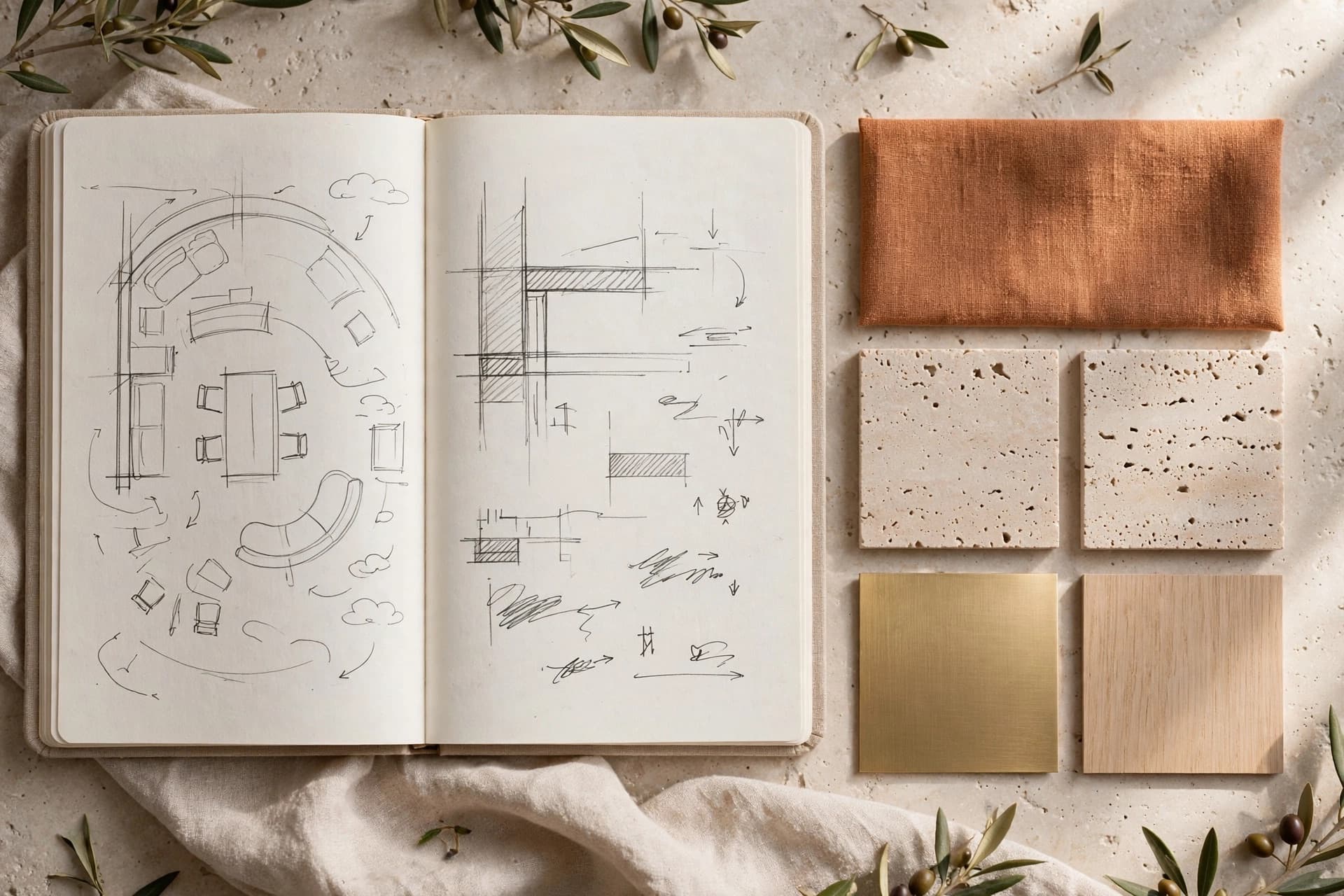
- 2Materials — "micro-cement floor, oiled oak fixtures, lime-plaster walls, brushed brass details".
- 3Light — "warm 2700K spots on the product walls, soft daylight from the left".
- 4Palette and mood — "sand, clay and off-white; calm, serene, a little clinical".
- 5Camera — "eye level from the entrance, wide".
Before and after
Weak: "Modern luxury skincare store, elegant, high-end, beautiful lighting, 8k render."
Strong: "A 90 m² skincare boutique with a consultation corner. Micro-cement floor, oiled oak display walls, lime-plaster walls, brushed brass shelf edges. Warm 2700K spots on the product walls with soft daylight from the left. Sand, clay and off-white palette, calm and serene. Eye level from the entrance."
The second one is not longer because of decoration. Every extra word is a decision the model would otherwise make for you.
Words that do nothing
- Quality incantations: "8k", "award winning", "masterpiece", "ultra detailed". These were folklore from an older generation of models and mostly add noise now.
- Pure judgement: "beautiful", "stunning", "amazing". They describe your reaction, not the room.
- Vague style labels used alone: "modern", "luxury", "minimalist". Useful as a qualifier, useless as the whole brief.
Negatives are weaker than positives
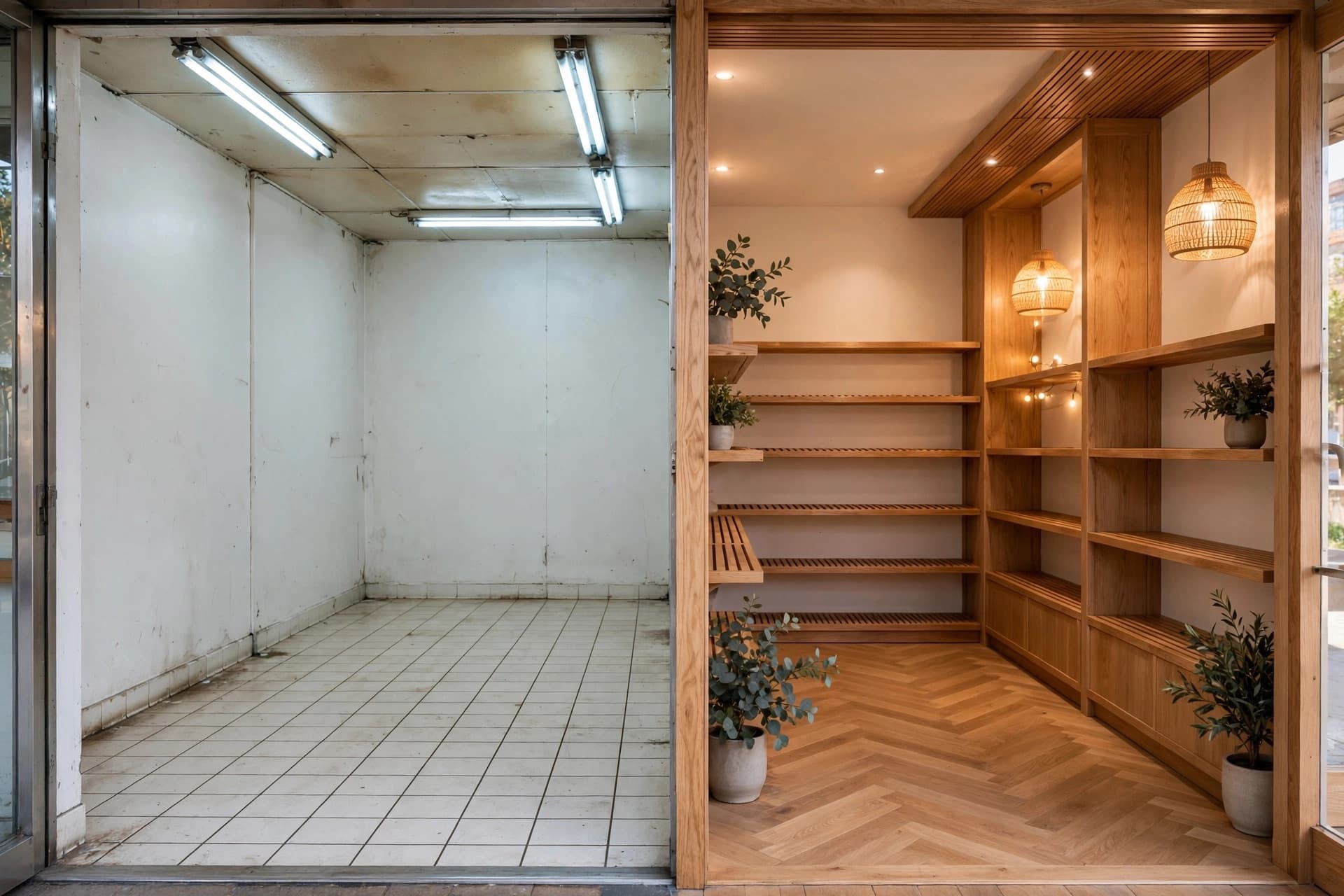
"No plants" is a much weaker instruction than "bare shelves". If you do not want something, describe what is there instead. This matters most when editing: "remove the round table" works, but "replace the round table with open floor" works better.
Iterate on one variable at a time
The temptation after a disappointing render is to rewrite everything. Then you have no idea which change helped. Change the floor. Render. Change the light. Render. Four one-variable iterations teach you more about the model than twenty scattershot ones, and they cost the same.
Treat the prompt like a specification you are debugging, not a wish you are phrasing.
Let the brand kit carry the repeatable half
Roughly half of a good prompt — palette, materials, mood — is identical across every render for the same client. That half belongs in a brand kit, saved once, applied automatically. What is left in the prompt is what is specific to this image: the space, the camera, the moment.
A checklist to keep next to you
- Did I name the floor material?
- Did I name the main fixture material?
- Did I say what the light is like and where it comes from?
- Did I give three colours rather than a style label?
- Did I say where the camera stands?
- Did I describe what I want rather than what I do not want?